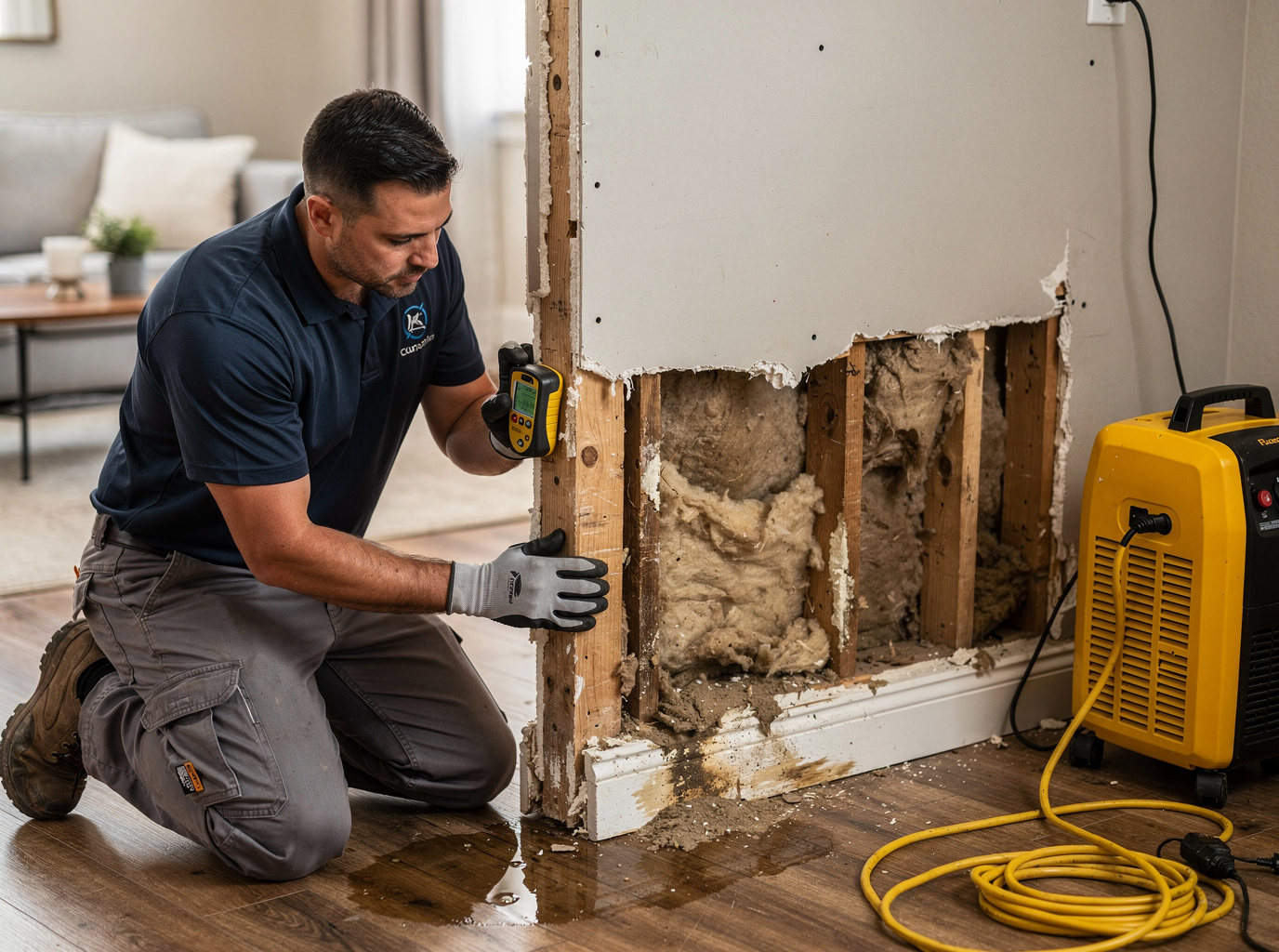
When an appliance leak strikes in your Lubbock home, the damage often extends beyond what's immediately visible, particularly to drywall, baseboards, and the hidden wall cavities. The porous nature of drywall means it quickly wicks water upwards, leading to swelling, softening, and eventually mold growth if not addressed promptly. In older homes common in areas like Downtown Lubbock or Tech Terrace, original plaster and lath construction can also suffer significant damage, requiring specialized drying techniques to prevent further structural issues. Our team understands the unique challenges presented by Lubbock's climate, where high winds can exacerbate moisture penetration, making rapid response crucial to minimize long-term damage and costly repairs.
Addressing wet baseboards and wall cavities is critical because these areas can trap moisture, creating ideal conditions for mold and mildew to flourish unseen. This is especially true in homes across South and North Lubbock, where varying foundation types and construction methods can influence how water behaves within wall structures. We utilize advanced moisture detection equipment to accurately pinpoint all affected areas, even those behind walls, ensuring no hidden moisture is left to fester. Ignoring these hidden damp spots can lead to persistent musty odors, compromised indoor air quality, and eventual structural degradation, making professional intervention essential for a complete and healthy recovery.
The process of drying and restoring wet drywall and baseboards involves more than just removing the visible water. It requires careful assessment of material saturation, proper ventilation, and strategic placement of dehumidifiers and air movers to thoroughly dry out the affected building materials. For instance, in areas like Lubbock County, where homes can experience significant temperature fluctuations, ensuring consistent drying conditions is paramount. We also consider the type of insulation present within wall cavities; fiberglass insulation can often be dried in place, while cellulose or spray foam may require removal and replacement if heavily saturated, to prevent future problems like sagging or mold. Our approach is always tailored to the specific conditions of your home and the extent of the water intrusion.
Technician insight
In Lubbock, the thing that often catches people out with wet drywall and baseboards after an appliance leak is how quickly the high winds we experience can draw moisture deeper into wall cavities, especially in older homes around Texas Tech or Tech Terrace. What looks like a small spill on the surface can rapidly become a much larger problem behind the walls, making immediate, thorough drying absolutely essential to prevent extensive mold growth and structural issues.
Hidden Dishwasher Leak in South Lubbock Kitchen
A homeowner in South Lubbock discovered a musty smell in their kitchen after a subtle dishwasher leak. We found significant saturation in the drywall behind the dishwasher and extending into the adjacent wall cavity, affecting the baseboards. We carefully removed the saturated sections, deployed targeted drying equipment into the wall void, and applied an antimicrobial treatment. The kitchen was thoroughly dried, preventing mold and restoring healthy conditions.
Wet Drywall Baseboards & Wall Cavities After an Appliance Leak Services We Offer
✓Drywall Water Damage Assessment
Thorough inspection using moisture meters and thermal imaging to accurately determine the extent of water intrusion into drywall and wall cavities, ensuring no hidden damp spots are missed.
✓Baseboard Water Damage Restoration
Careful removal, drying, and, if necessary, replacement of water-damaged baseboards to prevent mold growth and restore the aesthetic integrity of your rooms.
✓Wall Cavity Drying and Dehumidification
Specialized equipment and techniques to dry out the hidden spaces within your walls, eliminating trapped moisture that can lead to structural damage and unpleasant odors.
✓Mold Prevention and Treatment
Application of antimicrobial treatments to affected drywall and wall cavities to inhibit mold growth and ensure a healthy indoor environment after water damage.
✓Affected Insulation Removal
Safe and effective removal of water-saturated insulation from wall cavities, preventing further moisture retention and potential mold issues.
✓Structural Drying for Walls
Targeted drying strategies for wall structures, utilizing air movers and commercial dehumidifiers to restore moisture levels to safe, pre-loss conditions.
Wet Drywall Baseboards & Wall Cavities After an Appliance Leak Cost in Lubbock, TX
| Service | Typical Range | What Affects It |
|---|---|---|
| Drywall & Baseboard Assessment | $0 | Often included with restoration services or a nominal fee for standalone inspection. |
| Drying 1-2 Wet Wall Sections (up to 10 linear feet) | $500–$1,200 | Depends on depth of saturation, accessibility, and type of wall material. |
| Extensive Wall Cavity Drying (multiple walls/rooms) | $1,200–$3,500+ | Influenced by the number of affected walls, insulation type, and duration of drying. |
| Baseboard Removal & Disposal (per linear foot) | $5–$15 | Cost varies by material (MDF vs. wood) and complexity of removal. |
Ranges are typical for Lubbock, TX and confirmed with an exact written quote before any work starts.
How it works
- 1
Initial Assessment and Moisture Mapping
We begin by conducting a detailed inspection of the affected area, using advanced moisture detection tools to map the extent of water saturation in your drywall, baseboards, and within wall cavities. This helps us identify all areas requiring intervention.
- 2
Water Extraction and Material Removal
Any standing water is removed, and severely damaged or unsalvageable materials, such as buckled drywall or swollen baseboards, are carefully removed to facilitate drying and prevent mold.
- 3
Targeted Drying and Dehumidification
High-powered air movers are strategically placed to promote evaporation, while commercial-grade dehumidifiers extract moisture from the air and building materials, focusing on the wall cavities and surrounding structures.
- 4
Antimicrobial Application and Monitoring
An antimicrobial agent is applied to prevent mold and mildew growth. We continuously monitor moisture levels until all affected areas are thoroughly dried to industry standards, ensuring complete restoration.
Pricing
Costs vary based on the extent of water damage and the materials affected.